Most business owners do not spend much time thinking about their Google Business Profile until something goes wrong.
The hours are incorrect. An old phone number appears. A service is missing. A customer leaves a review that needs attention. Google changes information on the profile. A competitor appears more prominently for a search the business expected to win.
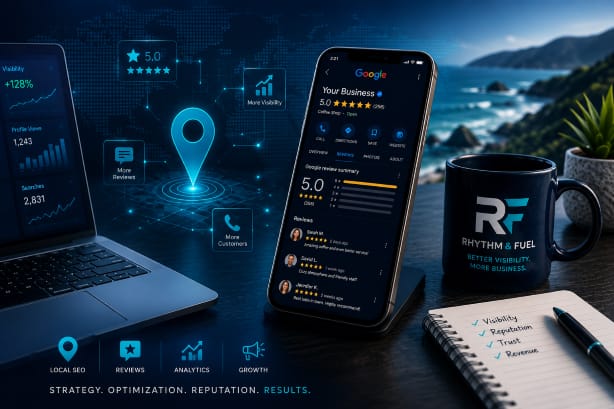
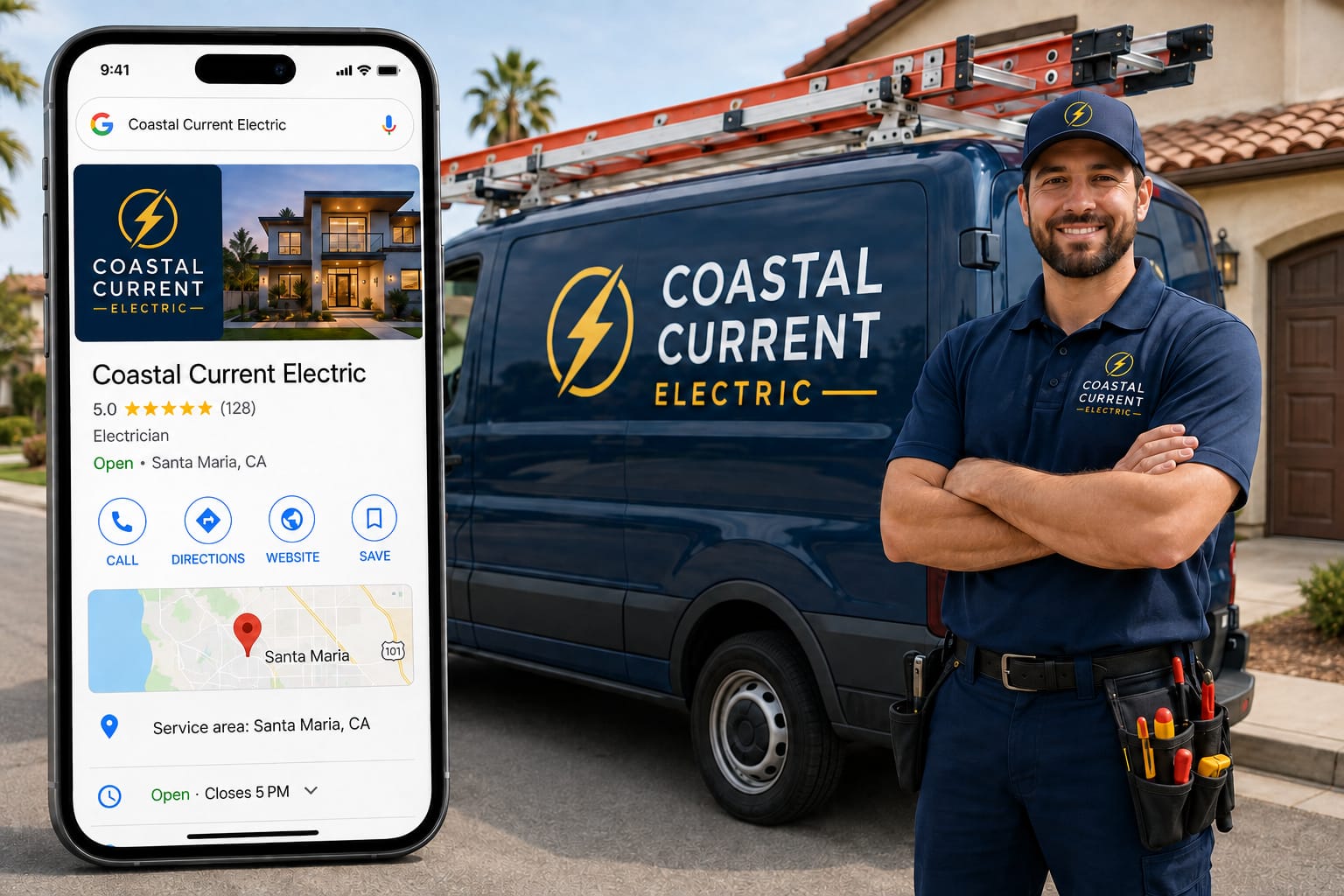
A Google Business Profile is part of your digital storefront. It may be one of the first places a potential customer encounters your business, and it can influence whether that person visits your website, requests directions, calls, books an appointment, or continues searching.
Setting up the profile is only the beginning. It needs accurate information, useful content, legitimate customer feedback, and periodic review.
Key Takeaways
- Keep your business information accurate across your profile, website, and other important online listings.
- Choose categories and services that reflect what the business actually provides.
- Review hours, contact details, photos, reviews, services, and profile changes regularly.
- Ask real customers for honest reviews without offering incentives.
- Respond to reviews with care because your response is public communication from the business.
- Publish Google Business Profile posts when you have something useful or timely to share.
- Treat profile optimization as an ongoing cycle of improvement rather than a one-time project.
Want help determining what your profile needs first? Rhythm & Fuel can review your current profile, identify the highest-priority issues, and recommend a practical plan. Schedule a consultation.
What Google Business Profile Optimization Actually Means
Google Business Profile optimization means making the profile accurate, complete, useful, and representative of the real business.
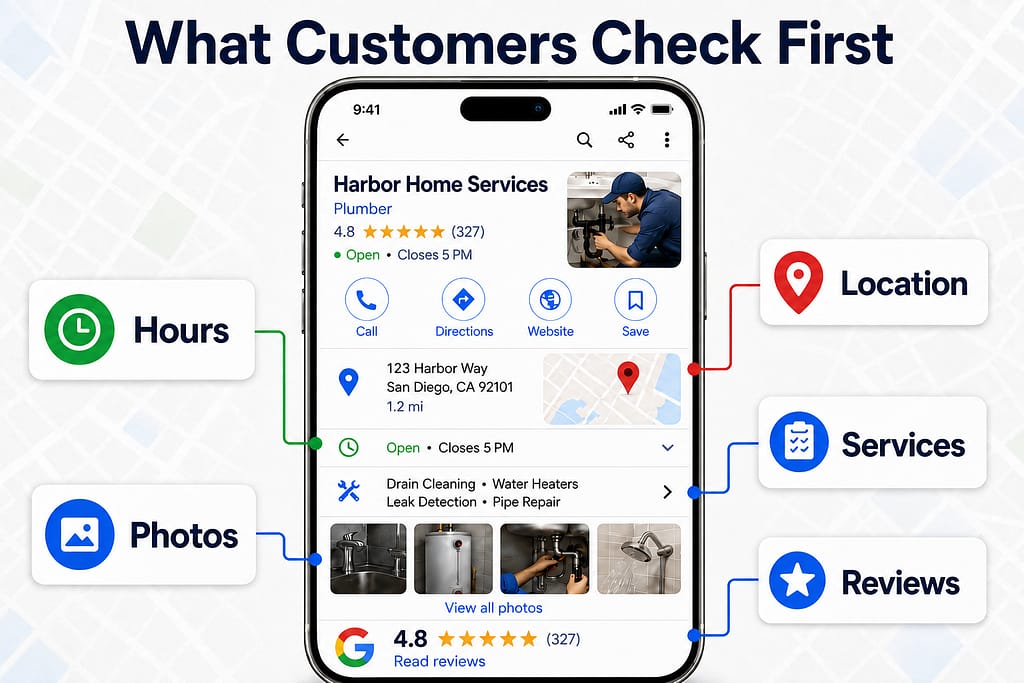
That includes reviewing the business name, address or service area, phone number, website, regular and special hours, categories, services, description, attributes, photos, videos, reviews, responses, posts, offers, events, and appointment links.
Relevant search terms should appear naturally when the profile accurately describes the business. A company explaining its products, services, specialties, events, promotions, and service area will often use the same language potential customers use when searching.
That does not mean keyword opportunities should be ignored. Categories, services, descriptions, posts, and other profile content should be written with an awareness of how customers describe what they need. The goal is to use clear, specific language wherever it helps people and Google understand the business.
Problems arise when phrases are forced into places where they do not belong. Repeating locations and services unnaturally, adding promotional language to the business name, or creating content mainly to insert search terms can make the profile less useful and may violate Google’s guidelines.
The best optimization takes advantage of legitimate opportunities to describe the business while keeping the information natural, accurate, and helpful.
For example, the business name should match the name used in the real world. Google’s Business Profile guidelines explain the requirements.
Google explains that local results are primarily based on relevance, distance, and prominence. Complete information can help Google understand the business and match it with appropriate searches, but no legitimate provider can purchase or guarantee a particular organic ranking. Learn how Google determines local ranking.
Optimization Is Only the Beginning
A newly optimized profile is a strong starting point. It is not the end of the work.
Businesses change. Hours shift during holidays. Services are added or discontinued. New photographs become available. Customers leave reviews. Links stop working. Google may also receive information about a business from users and other online sources.
Optimize → Maintain → Measure → Improve
Optimization gets the profile in order. Maintenance keeps it accurate. Measurement shows how customers are finding and using it. Improvement applies what the business learns.
Start With Accurate Business Information
The first priority is making sure customers receive correct information.
- Is the business name correct?
- Is the address or service area accurate?
- Does the phone number reach the right person or team?
- Does the website link open the most relevant page?
- Are regular hours correct?
- Are holiday and special hours current?
- Does the appointment link work?
- Are closed, moved, or duplicate locations creating confusion?
For a storefront, inaccurate hours can lead to a wasted trip. For a service-area business, an unrealistic or outdated service area can set the wrong expectations. A broken phone or booking link can lose a customer who was already prepared to act.
Google allows businesses to set special hours for holidays, events, and temporary schedule changes.
Choose Categories Based on What the Business Is
The primary category should describe the core business as accurately as possible. Additional categories can represent other legitimate parts of the operation.
Categories are not a bag of search terms. Selecting every remotely related category can make the profile less accurate and may violate Google’s guidelines.
A useful question is: What type of business is this? That is different from asking what every individual service the business can perform is.
Make Services Easy to Understand
Service information helps potential customers determine whether the business can solve their problem.
- Missing core services
- Services the business no longer offers
- Vague or confusing names
- Important service variations
- Descriptions that no longer match the work
- Pricing information that has become inaccurate
Use the language customers understand. The profile and website should support each other. The profile can introduce the service, while the website provides the detail needed to answer questions and encourage the next step.
Give Customers Useful Visual Information
Photos help people understand what they can expect from a business. Useful images may include the building exterior, entrance, interior, products, completed work, team members, equipment, service vehicles, before-and-after examples, and accessibility or parking details.
Choose clear, current images that help customers recognize the business and understand what it provides. Google provides photo and video guidance for Business Profiles.
Pay Attention to Reviews and How You Respond
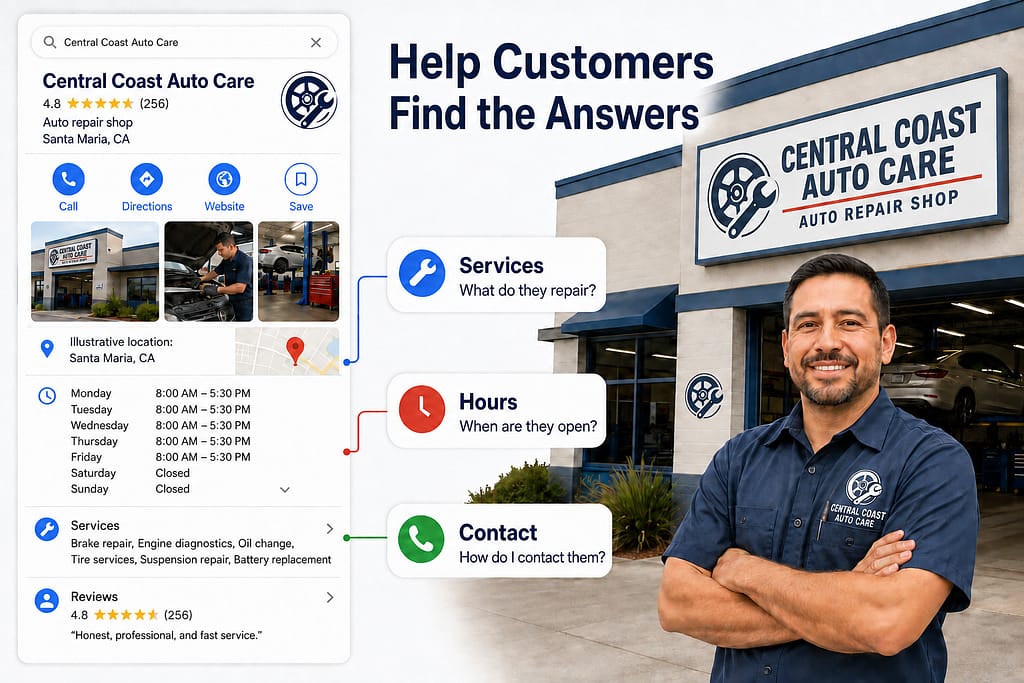
Reviews help potential customers evaluate a business. Google also states that review count and positive ratings can contribute to local prominence.
Businesses may ask customers for honest reviews and may provide a direct review link or QR code. They should not offer rewards in exchange for reviews or attempt to control what customers say. Google explains the permitted process in its guidance on getting more Google reviews.
Review management includes both monitoring and thoughtful responses. A positive review may only need a brief, specific thank-you. A negative or complicated review requires more judgment. Artificial intelligence can help organize review activity or prepare a draft, but a person who understands the business should decide what is appropriate to publish.
Use Google Business Profile Posts for Current Information
Google Business Profile posts can share timely information directly on the profile. Appropriate subjects include service announcements, seasonal reminders, limited-time offers, events, new products or services, recent projects, helpful answers to common questions, and useful website content.
Posts should exist because the business has something worthwhile to communicate. Publishing filler on an arbitrary schedule does not help customers, and posting frequency alone does not guarantee better rankings.
A useful post gives the reader a reason to care and a logical next action. Google explains the available options in its guide to creating and managing Business Profile posts.
Monitor the Profile for Changes
Information displayed on a profile can change. Business owners and managers should periodically confirm that the public profile still reflects the business correctly.
- Business hours
- Phone number
- Website and appointment links
- Address or service area
- Primary and additional categories
- Business status
- Services
- Important attributes
- Unexpected suggested or published changes
A Practical Monthly Profile Check
- Confirm the business name, phone number, website, location, and hours.
- Review special or upcoming holiday hours.
- Check categories and services for accuracy.
- Look for new reviews that need a response.
- Add useful recent photos when available.
- Confirm that booking and appointment links work.
- Look for unexpected profile changes.
- Decide whether the business has something worthwhile to post.
- Note recurring customer questions that could become future posts or website content.
- Review performance information for meaningful changes or patterns.
Common Problems to Fix First
The highest-priority problem is usually the one most likely to mislead a customer or prevent that customer from taking action.
- Incorrect regular or holiday hours
- An outdated phone number
- A broken or irrelevant website link
- Missing major services
- Services the business no longer provides
- Incorrect categories
- Old or misleading photographs
- Unanswered reviews that need attention
- Duplicate profiles
- An incorrect address or service area
- Keyword-stuffed business names
- Changes published without the business noticing
Local Visibility Involves More Than the Profile
The Google Business Profile is a major part of local visibility, but it does not operate alone. The business website, reputation, location, links from other websites, consistency of public business information, and relevance to the search can all affect how the company appears online.
Local search → Business Profile → Website or service information → Call, directions, or appointment
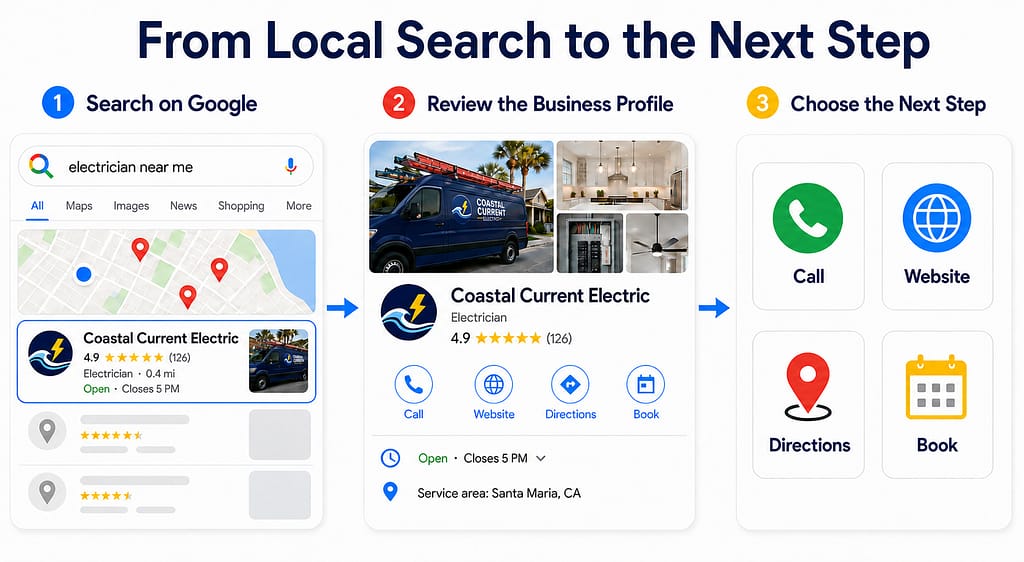
The profile should help a customer discover and evaluate the business. The website should answer deeper questions and support the decision to contact it. Reviews provide evidence of real customer experiences. Useful content allows the business to explain its expertise.
What Should You Fix First?
- Is anything wrong? Correct inaccurate hours, contact information, links, locations, and business details.
- Is anything important missing? Add legitimate services, categories, photographs, attributes, or action links that customers need.
- Is the information current? Remove or revise anything that no longer represents the business.
- Is the profile being maintained? Establish responsibility for reviews, profile changes, photographs, posts, and periodic checks.
Need Help With Your Google Business Profile?
Rhythm & Fuel helps local businesses improve and maintain their presence across Google Search and Maps. Services may include Google Business Profile optimization and setup, profile maintenance and monitoring, review management, review-growth systems, Google Business Profile posts, website and local content, and local visibility planning.
We work with businesses in Santa Maria, Orcutt, and communities throughout California’s Central Coast.
If you are unsure what needs attention first, Rhythm & Fuel can review your current profile, identify the most important issues, and develop a practical plan based on your business. Schedule a consultation with Rhythm & Fuel.