Let’s Talk Transparency
Yes, We Use AI.
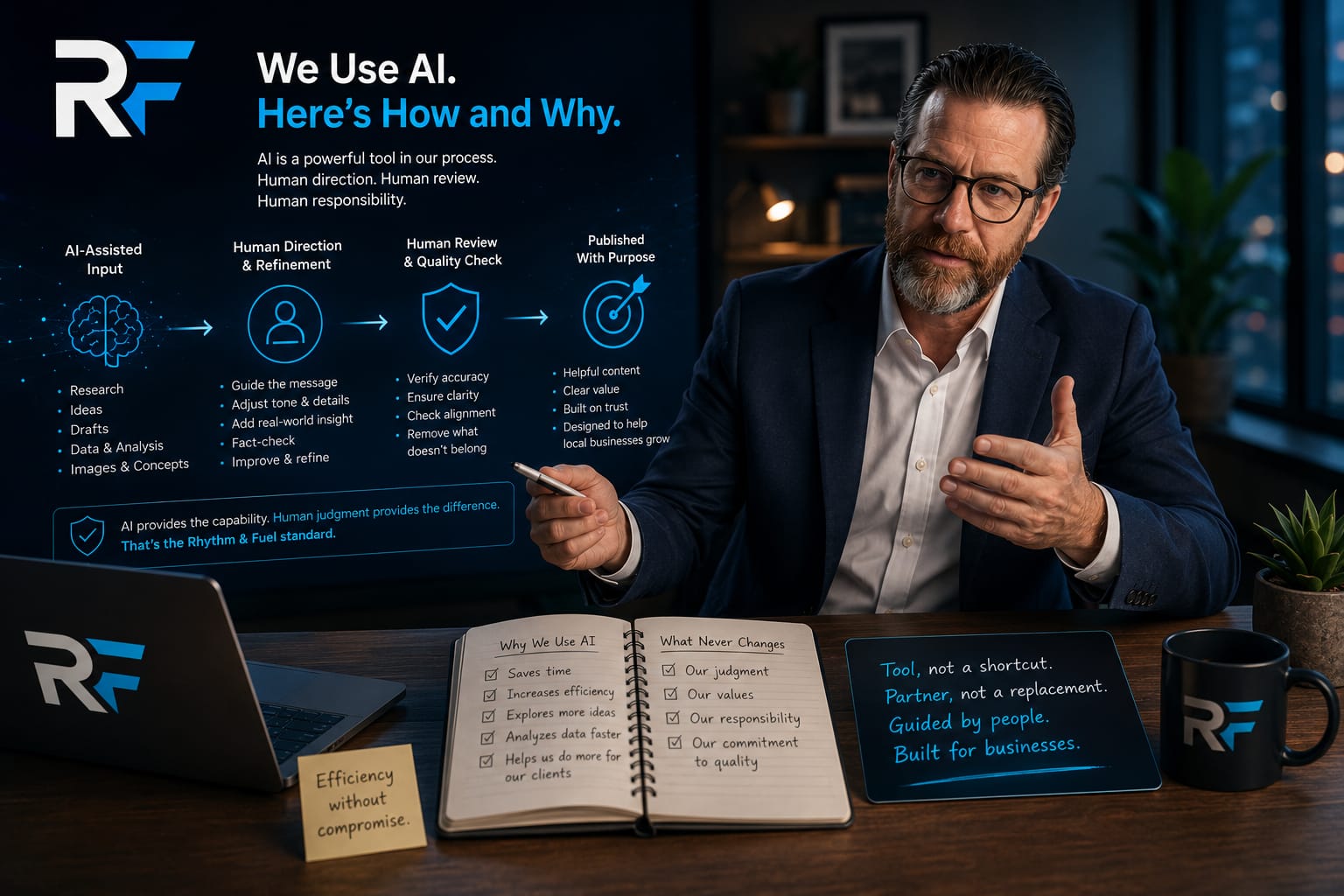
At Rhythm & Fuel, we believe in being straightforward about how we work. So let’s address something you’ll see increasingly across our website, content, and the work we produce: we use AI.
We use it to research ideas, organize information, explore concepts, develop drafts, create imagery, analyze data, refine workflows, and speed up parts of the production process that would otherwise take an enormous amount of time.
But there is an important distinction: AI is a tool in our process. It is not the person responsible for the finished product.
AI-Assisted Doesn’t Mean AI-Decided
We don’t type a prompt, accept whatever comes back, and hit Publish.
The ideas we’re trying to communicate come from us. The direction comes from us. We decide what belongs, what doesn’t, what sounds right, what sounds ridiculous, and what actually represents what we believe.
Sometimes an AI-generated draft is close. Sometimes it’s wrong. Sometimes it’s technically fine but doesn’t sound anything like something we’d want to say. And sometimes it produces complete garbage.
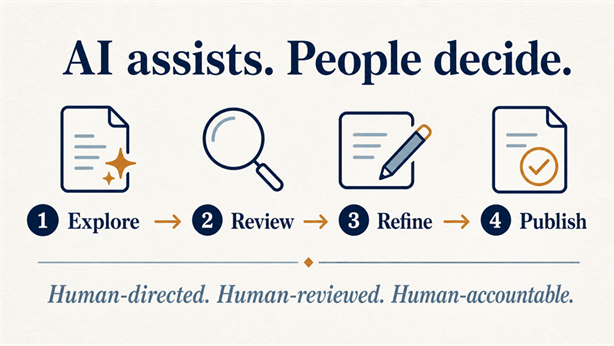
That’s where human judgment matters. We guide it. We question it. We fact-check where necessary. We revise it. We throw things away. We try again. We combine ideas. We change direction.
Ultimately, a human being decides what represents Rhythm & Fuel and what gets published under our name.
Why Use AI at All?
Because there is a tremendous amount of work involved in building and maintaining a professional digital presence.
Research. Writing. Images. Reviews. Business information. Content planning. Data analysis. Documentation. Websites. Google Business Profiles. Processes. Reporting. And dozens of little tasks surrounding all of them.
Used thoughtfully, AI makes it possible to accomplish more of that work without sacrificing the attention and judgment that the work deserves. That’s valuable to us.
It also means we can spend more of our time on the parts technology cannot replace: understanding the business, making decisions, talking with people, solving problems, exercising judgment, and figuring out what actually makes sense for a particular client.
Every Disruptive Technology Changes How People Work
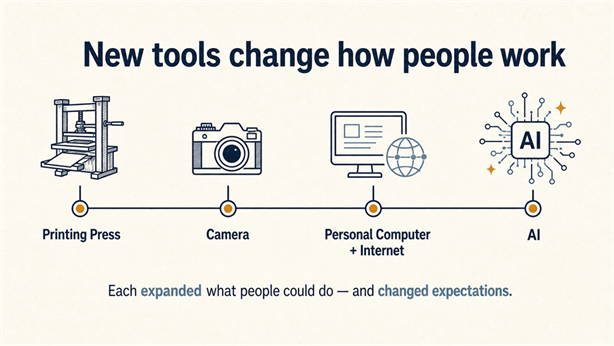
AI is not the first technology to disrupt familiar ways of working, and it won’t be the last. New tools have always changed what people can do, how quickly they can do it, and what kinds of work become possible.
Consider the horse buggy. For generations, it was practical and essential transportation. Then the automobile arrived. Cars did not simply improve the buggy; they changed transportation, infrastructure, commerce, and daily life. The buggy became less common, but it did not become meaningless. It became part of history, recreation, and tradition.
The same pattern has appeared repeatedly. The printing press transformed how information spread. The camera changed how we captured a person’s likeness. Personal computers changed office work, and the internet transformed how people find information, conduct business, and connect with one another.
These technologies were disruptive because they changed expectations and created new possibilities. They also created uncertainty, displaced familiar tasks, and required people to learn new skills.
AI Is Part of That Broader History
The important question is not whether a new technology feels unfamiliar, or whether it replaces every older tool overnight. The important question is whether we understand what it is good for—and where it should not replace judgment, skill, or responsibility.
We’re not interested in pretending AI isn’t here. We’re also not interested in treating it as a magic button that eliminates the need for people.
We believe the better response to disruptive technology is to understand it, embrace its useful capabilities, and use it responsibly.
That doesn’t mean every business has to use AI. It doesn’t mean every task should be automated. And it certainly doesn’t mean human creativity, experience, or relationships have become unnecessary.
It means the tools available to us are changing, and we believe it is better to learn how to use them well than to resist them simply because they are new.
AI Is Here to Stay. We’d Rather Use It Responsibly.
We understand why some people are uncomfortable with AI. Artists, copywriters, designers, and other creative professionals have legitimate concerns about how these tools affect their work, their livelihoods, and the value of human creativity. Those concerns deserve to be taken seriously.
At the same time, AI is now part of the world we work in. Businesses and individuals can choose how they respond: ignore it, resist it, approach it cautiously, or learn how to use it thoughtfully and responsibly. We choose the last option.
That does not mean accepting every use of AI or pretending there are no problems. It means recognizing the reality of the technology, embracing what it can do well, and using it as a tool while keeping human judgment, accountability, and creativity at the center.
The Problem Isn’t AI. It’s What People Choose to Publish.
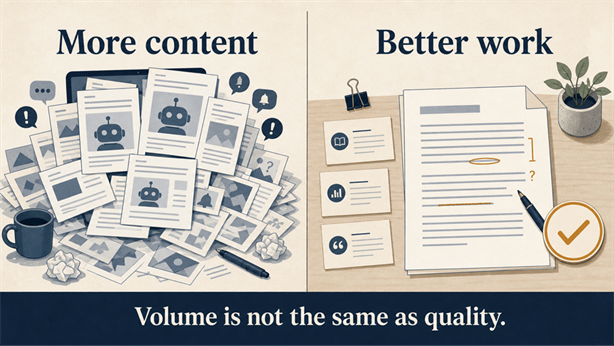
We’ve all started seeing it. Bizarre AI videos. Meaningless images. Generic articles. Robotic social posts. Content generated simply because someone discovered they could press a button and make more content.
The technology makes creating something incredibly easy. It does not automatically make that something worth publishing.
We think that’s an important distinction.
A powerful tool in careless hands can produce an enormous amount of noise. The same tool, directed carefully by someone who knows what they’re trying to accomplish, can dramatically improve what they’re capable of producing.
Human-Directed. Human-Reviewed. Human-Accountable.
That’s the standard we’re establishing at Rhythm & Fuel.
We may use AI during research. We may use it to help develop an article. We may generate imagery with it. We may use it to analyze information, brainstorm alternatives, organize data, improve processes, or help us see something from another angle.
But we remain responsible for the result.
If something appears on the Rhythm & Fuel website, we aren’t going to hide behind the explanation that “AI made it.” We chose to publish it. And that means we’re responsible for making sure it represents what we actually want to say.
Technology Should Make the Work Better—Not Remove the Human From It
We’re building Rhythm & Fuel around practical technology, efficient systems, straightforward communication, and real relationships with the businesses we serve. Our use of AI for digital marketing fits naturally into that approach.

People remain at the center. The work is ultimately about people, relationships, and better business decisions. AI can support the process, but it cannot replace the conversation, context, or judgment behind a good decision. WordPress placement: use a smaller image with this text beside it on desktop; stack the text under the image on mobile.
Used properly, it allows a small operation to develop capabilities that once required considerably more time, manpower, and resources.
We think that’s exciting. We also think people deserve to know when and how we’re using it. So we’re telling you.
Yes, Rhythm & Fuel uses AI.
We use it deliberately.
We use it extensively.
And we use it as a tool—not as a substitute for judgment, responsibility, creativity, or human relationships.